
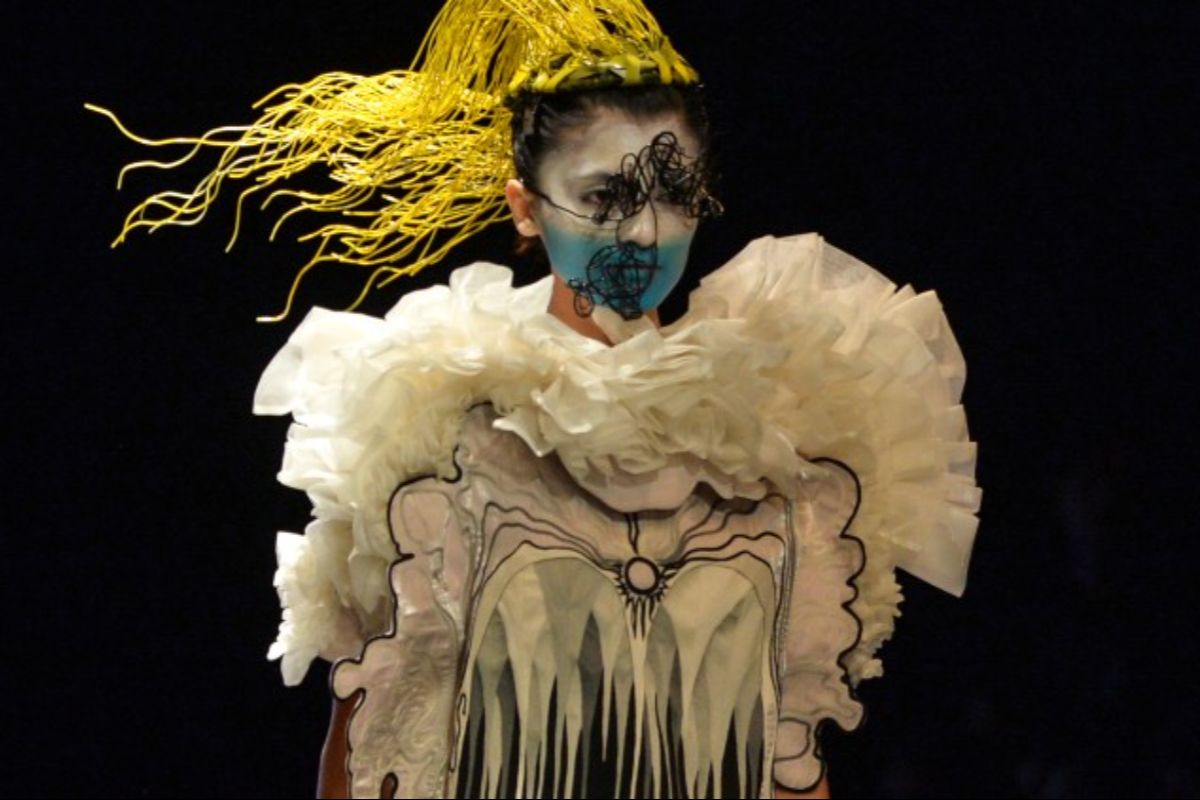
Nitin Bal Chauhan: Fashioning Protest
Source - The Voice of Fashion - Snigdha Ahuja
Link - https://www.thevoiceoffashion.com/centrestage/features/nitin-bal-chauhan-fashioning-protest-3439
From mental health awareness to warfare—the designer on using fashion as a communicative tool
We meet Nitin Bal Chauhan on a bitingly chilly Delhi morning at his clothing store at Ambawatta Complex, a modestly spaced area with a low-hanging chandelier right out of a period drama. Chauhan has just returned from The India Story, a fashion and lifestyle exposition in Kolkata. He speaks of fatigue, but his clothes tell a different tale. The crisp grey blazer is accessorised with a bottle green scarf, worn around the neck in perfect composition.
Apart from being a sharp dresser, Chauhan is an artist, fashion designer, filmmaker and khaka master to his artisans. The 40-year-old is also quite the orator who attempts to design clothes that speak for themselves. From reimagined kurtas to layered gowns and overlays, the ingenuity is embroidered with motifs designed to question. If a tumbling umbrella charts the vestiges of a historical mass exodus on a garment, a camera that disintegrates at the edges stirs ideas of memories and the short-term calibre of a click-ready contemporary world. There’s a dominant use of monochromes and prints that convey angst, anger and peace—his ideas, often spelled out in abstract ways.
But at the heart of his clothes, Chauhan insists, is protest. “If I am feeling something, I have to speak in the language of fashion,” he says. When he graduated from National Institute of Fashion Technology (NIFT) in Delhi in 2002, his final collection was based on the Kargil War of 1999. For his runway debut at Gen Next at Lakmé Fashion Week in Mumbai in 2007, the Guantanamo Bay detention camps played on his mind. Then came ‘I Cannot See My Content Face,’ a collection born out of the agony of human suffering. 2009 was marked by a two-part collection, ‘Conditions Apply’, with designs that reflected the perils of urban life.
The point, Chauhan argues, is to advocate for a new “currency” that adds to the relationship between a designer and his buyer, ushering a “small resistance” through each creation.
Fashion Activism
Protest fashion draws from dissonance and discord that has made its way between the seams globally. From Christopher Bailey’s final show for Burberry with a call for non-binary thinking to model Ayesha Tan-Jones staging a protest against Gucci’s straitjacket-inspired designs, the personal is often political, and the political is often public. History is a testament to the power of the dress and its relationship with society—from Suffragette white to swadeshi dressing back home.

Embroiders working on an artwork painted by Chauhan.
Chauhan, a self-taught artist, takes his designs from the sketchbook to the runway. For the spring/summer line, showcased at Delhi’s Lotus Make-Up India Fashion Week earlier this year, his hand-drawn reflections on mental health walked the ramp. The show day, October 10, is observed as World Mental Health Day globally. The brush-stroke iterations of chaos and clarity that a sufferer of failing mental health fluctuates between were interpreted through jagged prints on dresses, skirts and separates. “Someone actually bought the top which said “Death,” Chauhan says, drawing attention to the buyer who could relate.

A glimpse at the designer's collection, Dementia.
Back in March, Chauhan showcased another line at the same event, a collection inspired by the crime noir novel ‘From Hell’, a fictionalised account of serial killer Jack the Ripper. The idea was to comment on the “cobweb” character of law and those who are able to break it without facing punishment. The jackets, skirts, anti-fit dresses, tunics and tops featured portraits, shapes and three dimensional embroideries inspired by the novel’s graphics.
The Business of Making a Noise
However relevant a thought might be, it doesn’t promise the din of cash registers. “Design is also about manufacturing and selling. So you are always trying to find a balance, which I learnt the hard way,” Chauhan confesses, adding that a commercial line that moves the market is essential, but it doesn’t require compromising on creativity. Even if all buyers can’t relate to his designs, the unusual motifs and prints help in initiating a conversation or sometimes, a debate. Be it at the store, or at exhibitions where his work is retailed.

A look from Chauhan's 'From Hell' inspired White Chapel collection.
“The recall (of the concept or design) should be provoked at a sub-conscious level. But the garment also must have an aesthetic appeal,“ Chauhan adds.
When it comes to voicing dissent, he is able to identify young fashion players from India who are trying to push the envelope. Like the thought-provoking work of fashion label Huemn, the textual ingenuity of Rimzim Dadu and the growing crop of designers establishing codes of sustainability.
At the core of protest fashion though, is its ability to present a perspective. “Buy this piece because you are worth it? No!” Chauhan exclaims, emphasising that it’s the mindset of the creator that has to evolve. The market must not be manoeuvred by a single product “that tries to change how the whole world thinks, just to sell its face wash,” he says, adding that creations should have the ability to comment, and the buyer, the propensity to question.